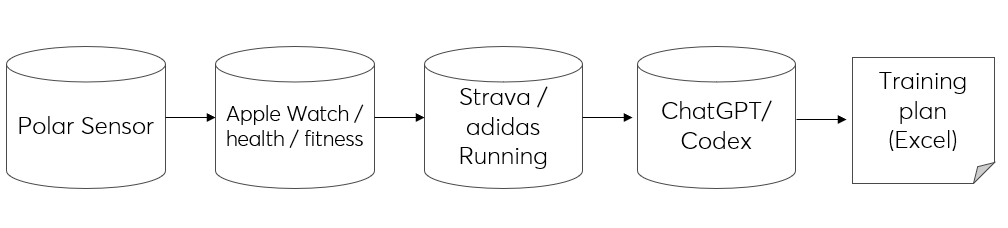
This is a brief overview of how I collect and process the data and what outputs I generate from it.
The training data is recorded using a Polar upper-arm heart rate sensor. According to Polar, this type of sensor is designed to provide more accurate heart rate measurements than the wrist-based optical sensors integrated into most sports watches.
The data is transmitted from the sensor via the Polar app to the Apple Watch, allowing me to monitor the relevant metrics during training. The data is also stored in Apple Fitness/Health and shared from there with platforms such as Strava and adidas Running. Data sharing can be enabled within the privacy settings of the respective apps. At this stage, this part of the data collection process is fully automated.
After each training session, I currently create screenshots of the training results manually (see example below) and upload them to ChatGPT/Codex, always using the same conversation to maintain continuity. In addition to the recorded training data, I provide a short subjective assessment of the perceived training load on a scale from 1 to 10, as well as information on the prevailing weather conditions.
As expected, ChatGPT acts as my running coach. It provides feedback on each individual training session and adjusts the training plan for the upcoming sessions based on the accumulated information. The Codex workflow additionally generates an Excel-based training plan. I will describe this part of the process in more detail elsewhere, as the focus here is primarily on data collection and processing.